Showing posts with label Roger Daltrey. Show all posts

Monday, May 20, 2013

HAPPY BIRTHDAY PETE TOWNSHEND: The Who -- 1921

In 1968, The Who were at a crossroads. The four lads were well known in England but considered a definite second class to the Beatles and the Rolling Stones. In the U.S., they were still an enigma to the masses. The year prior they had released one of the most successfully ambitious and entertaining records to ever hit the bins, the quasi-concept album, The Who Sell Out. But nobody in the U.S. bought it and few in the UK appreciated the album beyond the one single to come from the album, I Can See For Miles. (it didn't help that the theme of the album was an attack on state-run radio). For a very frustrated Who, success on the charts was as elusive as modesty is for Kim Kardashian. But their live performances were winning fans over one at a time. One was John Phillips of the Mamas and Papas who picked The Who to perform at the Monterey Pop Festival for the final night. Their blitzkrieg performance served not so much as a coming out party in the US, but more as a full frontal assault. After the American musicians and critics regained their hearing they asked, "who was that and what's next?"

The pressure was on and Pete Townshend, like a dog with his first taste of blood, began trying to expand on his nascent steps of writing a single thematic for an entire album. The result was 1969's hugely ambitious, Tommy, the so-called rock opera. This was not about flowers in your hair, love, and peace. This was about murder, pedophilia, false messiahs and the life affirming power of music. This self-produced album, with french horns and copious amounts of acoustic guitars was quiet, dark and brooding. This album effectively ripped the band-aid off of Pete Townshend's fragile psyche and exposed performances that are as gentle and complex as the subject matter is troubling and complex.

On the first side of the four sided album is a humble little song that introduces us to the central plot of Tommy. The song is called 1921 and it is our Song of the Week. Even certified Who fans might have to pause to recall this song...and it certainly won't ever make any greatest hits double disc. The Who often dropped it from their live performances of Tommy. But that is part of the beauty of this song. 1921 is one of those many intricate Pete Townshend songs in which he lays his soul out for all to see. But as he had done before with deeply personal songs (think Sell Out's Sunrise), the song is obscured from the listener with its shy demeanor and elliptical lyrics.

Let's linger over those elliptical lyrics for a second. As mentioned earlier, they tell our central story through which the rest of the album must be understood. But in typical Townshend fashion, he forces the listener to work for it with a constant sleight of hand. His central tool in this musical prestidigitation is the constant switching of narrator.

(Allow me to pause and give a Cliff's Notes version of the scant few lines contained in the six minutes of sublime music which precede 1921 on the album). Mr. and Mrs. Walker are a newly married British couple in love. Captain Walker soon heads off to do his duty for the Empire at the outbreak of World War I. In the father's absence, his son, Tommy, is born. Around this time Mrs. Walker is told that Mr. Walker has gone missing with a number of men, and that he is presumed dead.

It is at this point that we pick up our song sung from many different perspectives, all of which, except one, are sung by Townshend at his most vulnerable. It's New Year's eve and Mrs. Walker has found a potential new father for her young child. Mrs. Walker's unnamed lover opens the song (verse 1; PT) as he whispers words of proposal in the mother's ear while making love. Presently Captain Walker miraculously (and mysteriously) returns home to find his wife entwined with the lover. An enraged Captain Walker confronts the lovers (verse 2, PT) and, in one of Townshend's most susceptible vocal performances, turns to the wife and says "I had no reason to be over-optimistic, but somehow when you smiled I could brave bad weather." And with that the Captain violently kills the lover. Unbeknownst to him, his son (at least we think it is the Captain's son), witnesses the murder while looking through a mirror in the next room (we learn the particulars of this part later). And in verse 3, PT still singing, takes on the roll of the mother as she pleads "What about the boy, he saw it all"? Here is where things get interesting, both narratively and musically. Pete Townshend now plays the part of both mother and father as they turn to the juvenile Tommy and insist to him that he "didn't hear it, didn't see it, won't say nothing to no one ever in his life." Roger Daltrey, makes his debut as Tommy as he rebuts his parents and futilely argues against the orders ("I heard it", "I saw it"). Browbeaten, the young Tommy succumbs to his parents' wishes and resigns:  "I won't say nothing to know one...never in my life." And so it is, in this one verse with three narrators singing over each other, Tommy is psychologically programmed to be deaf, dumb and blind.

Mission accomplished, the Walker's turn their attention back to each other as the father now apes the words of the dead lover. Mrs. Walker, in turn, looks for forgiveness as her unsteady voice betrays the limits of her optimism. Townshend's bittersweet voice hits that perfect balance of sad and happy as the mother struggles to make sense of what is. A coda of distinctive chords (Eb - Absus4/Eb - Abm/Eb) rings out before we are represented with the central question of the album. A largely auto-biographical question, "what about the boy?" That is a question best answered by the rest of the album. 

Pete Townshend was only 24 years old when he wrote the groundbreaking 4th Who album that would shoot to the higher echelons of the charts on both sides of the Atlantic. The Who took their album on the road for nearly two years where it would transform from a soft, sensitive, introspective confession into a brash, bold, powerful statement of the healing powers of music. It was the end of one turbulent decade, and the beginning of another. It was the end of an innocently self-conscious mod band and the beginning of the most articulate pilgrims of rock. And it was the end of a commercially tenuous band, and the beginning of one of the most successful in history. It was The Who. Enjoy! Until next time, we'll see you on the Flip-Side.

Friday, May 3, 2013

Song of the Week: The Who - Drowned and José Feliciano and Joe Cocker - Hitchcock Railway

Our final (of 5) days of looking at The Who songs and our removal of layers of the songs' onion to get a better understanding of their origin. We've looked at Young Man Blues, Zoot Suit, Daddy Rolling Stone and Anytime You Want Me. Each of those songs had origins dating to the earliest days of The Who. Today we jump to The Who's last great album, 1973's Quadrophenia.

One of the peppier songs on that album can be found deep on side three. The song is the wonderful Drowned. The dominant riff of the song was lifted from a song called Hitchcock Railway. Pete Townshend became familiar with the song when Joe Cocker and his band toured in support of The Who in 1969. Pete fell in love with the piano riff played by Chris Stainton and wrote a whole song around it. He was so enamored with it, Pete asked Chris to play on The Who's recording of Drowned, instead of the usual pianist, Nicky Hopkins, who had been on nearly every recording with The Who since 1964.

Chris Stainton:
Pete had watched the Joe Cocker set and seemed to be very impressed by the piano riff I was playing in Hitchcock Railway, which I lifted from José Feliciano's version. He never forgot it, and years later asked me to play in that style on the Quadrophenia album. (source: Won't Get Fooled Again: The Who From Lifehouse to Quadrophenia, Richie Unterberger. Jawbone Press, 2011. p. 213).
As author Richie Unterberger's research shows, "Townshend happily owned up to his influence in public" (ibid). Pete Townshend:
'We were just doing Drowned, which was using a Chris Stainton riff that I pinched from Hitchcock Railway, and we met a friend of his,' Townshend told Sounds. 'I said it would be really nice if he [Stainton] came down, and the next day he came down and we did that number, and he enjoyed himself so much that we used him on on a couple of other pieces.' (ibid)
Here is Chris Stainton playing Hitchcock Railway with Joe Cocker:
As Stainton references above, the song actually comes from José Feliciano who released the first version of Hitchcock Railway in October of 1968 for RCA Records. Here he is performing the number.
And, because we love you (strongly established already), here is Pete Townshend's demo for Drowned.  
Leave a comment below. Let us know what you think of all this. Until next time, we'll see you On The Flip-Side!

Wednesday, May 1, 2013

Song of the Week: The Who (High Numbers) -- Zoot Suit and The Dynamics - Misery

We're back with the overly-hyped day three of our look at a few covers by The Who and their origins. Without further ado, I present to you...

In the earliest days of The Who, the band was largely generic and directionless. The Who's manager at that time, Pete Meaden, was trying to find a hook for The Who and endeavored to make the band "more mod." As a result he changed their name to The High Numbers (a "high number" being a term to refer to a person having a relatively high social rank in the movement) and took Pete Townshend to a mutual friend's house to listen to American soul and blues records to build out the band's repertoire. In the early Summer of 1964 the two Pete's settled on four songs they would lay down for their first recording session: Eddie Holland's Leavin' Here, Bo Diddley's Here 'Tis, Slim Harpo's Got Love If You Want It, and, perhaps the most obscure of these, The Dynamic's Misery. But Pete Meaden really wanted the records to be mod anthems. So, rather unscrupulously, Meaden rewrote the words to two of the songs in an effort to capitalize on the mod lifestyle. Got Love If You Want It became I'm The Face (the highest rank a Mod could achieve) and Misery became Zoot Suit.

Meaden claimed writing credit for both "originals". The record saw a tiny release on July 3, 1964. I believe about only 1000 were pressed on the Fontana label but without a recording contract. Meaden shopped it to record companies and the band sold or gave away the record to the mods who crammed into the Railway Hotel on the weekends to see their boys play. Not much came of it and it hardly sounds anything like the band who would go back into the studio a few months later to record Pete Townshend's first ever original, I Can't Explain.
The little known original song from which this number was pinched, as already noted, was called Misery performed by a Detroit group called The Dynamics. It was released in the US on Big Top records in October of '63. It even saw a release in the UK the next month when London records picked it up.

Back in 2010 we wrote an article on this record. Much to our pleasure, the original guitarist, Chris Bramlett, found the article and left us some nice comments, including information on the equipment he used. Please see that article here for more information. It says more than I need to in this space.

Disclosure note, I picked up the picture of the handwritten High Number's Zoot Suit from White Fang's fan page. A great resource run by one of the mods that inhabited that Railway Hotel in the Summer of '64. Note that the name The Who was crossed out on the label and replaced with The High Numbers!

Until tomorrow, we'll see you On The Flip-Side!


Tuesday, April 30, 2013

Song of the Week: The Who and Mose Allison -- Young Man Blues

Day 2 of our look at the origins of The Who finds On The Flip-Side looking at Young Man Blues. The song was written and recorded as A Young Man by jazz pianists and Tupelo, Mississippi native, Mose Allison. But more on him and that recording later. It is this song, we should note, that was the inspiration for Pete Townshend's magnum opus, My Generation. It's not hard to make the connection -- a young man filled with frustration and searching for a voice of one's own, even if that voice stutters in the face of powerful oppression.
The Detours perform Young Man Blues at The Scene Club
The first recording we feature today is from a bootleg called Keep From Crying which I picked up when in high school (I bought it from my HS Psychology teacher!). The recording appears to have been made on February 9, 1964 at the Scene Club in London. The band was likely going under the name of The Detours that night. Sometime that month they would change their name to The Who (and then briefly to The High Numbers). The band is raw and young and the song, while changed from Allison's piano number, remains largely a jazzy piece. Note that the elder statesmen, Doug Sandom, is still on drums. Keith Moon wouldn't show up for a few months yet.
The Who perform Young Man Blues -- Studio
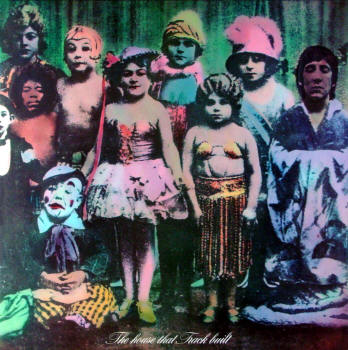
The second recording is almost as rare as the first. It is a studio recording of Young Man Blues which the boys laid down in October of 1968 as they entered the studio to begin recording their album, Tommy. Pete hadn't quite filled out the song list or even fully fleshed out the story line of Tommy at this point. As such, Pete considered trying to shoe-horn the beloved Young Man Blues into the story line of a frustrated and misunderstood boy bullied into a catatonic state. The arrangement is neither fully like the preceding recording, nor like the following. And, to be blunt, it's not very impressive. Ultimately the usage of the song would be shelved and it would appear only on the beyond-rare 1969 compilation album, The House That Track Built.
The Who perform Young Man Blues -- Live at Leeds
The Who were among the greatest live bands ever. Okay, I'll say it, in their heyday there was no band as good as The Who when they took to the stage. And that heyday was, luckily, caught on tape six years and five days after our first featured recording on this post. It was Valentines Day of 1970 and the four working class lads from Sheperds Bush UK took to the stage in the college town of Leeds. The second song from that set was Mose Allison's Young Man Blues. And how the boys had grown up. The song is no longer a laid back jazz number, but instead a testosterone fueled explosion. But the amazing thing is, Pete's original arrangement as captured that night at The Scene Club, remains largely intact. The song was slated for release as a single in the US on Decca in September of 1970. They pressed a small but unknown number of records and included a picture sleeve, but never formally released the single. A very few found their way into circulation, making it one damn hard to find 45rpm record.
Mose Allison performs A Young Man
Ahhhh, Mose the muse. Here is the original recording from the 23 year-old Mose Allison's first album, Black Country Suite, released on the Prestige label in 1957. Cool and laid back and only 1:26 long, it is the unlikely song that inspired a big-nosed kid from the West End of London to challenge the system and grow more confident in his own voice.

Until tomorrow, we'll see you On The Flip-Side!

Monday, April 29, 2013

Song of the Week: The Who and Otis Blackwell -- Daddy Rolling Stone

The Who perform Daddy Rolling Stone
Otis Blackwell performs Daddy Rolling Stone

A little something different for this week's posts. We're going to take a look at five songs by The Who and trace them back to the original composer...or at least, to the inspiration behind the song. Not easy as The Who dropped studio recording of covers pretty early on and, unlike The Yardbirds, the early days of The Rolling Stones, or Led Zeppelin, Pete Townshend wrote largely fresh material.

We start today with Daddy Rolling Stone. That song was never released by The Who in the US, but it did see release in Europe as the Flip-Side of their third single, Anyway, Anyhow, Anywhere (the second under the name of The Who).

The Who's upbeat number was released on May 21 of 1965 on Brunswick in their native UK. Keith Moon's tin-can drum kit gets beaten to a pulp and Pete turns in some very fine single string lead work to make this a pill-infused mod raver. Roger is still in his "growl" phase and is supported nicely by John and Pete doing their best Marvelettes impersonation. From live recordings I've heard, I can say definitively, that this studio recording successfully captures The Who's live sound at this stage of their career.

Daddy Rolling Stone was written by Otis Blackwell and was his first release in 1953 for the Jay-Dee label. Blackwell's original is a slow brooding number with strong jazz undertones. Otis Blackwell was a prolific writer of many of the songs we consider standards. All Shook Up, Return To Sender and Don't Be Cruel for Elvis Presley, Great Balls of Fire and Breathless for Jerry Lee Lewis, Fever for Little Willie John are just a few of the notables.

Enjoy and we'll see you on the Flip-Side. 

Tuesday, October 9, 2012

Video Diary: The Who - My Generation

And another happy birthday. This time to the legendary bassist for The Who, John Entwistle. John would have been 68 today.

Tuesday, September 18, 2012

Song of the Week: The Who - Little Billy


Sometime after the nice little band from Shepherd's Bush released the brilliant, The Who Sell Out, a mockery of advertising and the music industry, someone from the American Cancer Society thought it might be a good idea to have a rock-n-roll band speak up against cigarette use. Maybe even record a quick little jingle like the four limeys had done to link their songs together on the aforementioned Sell Out album. Pete Townshend accepted and wrote a full length song. But Pete's sardonic whit was too much for the American Cancer Society. As a result, The Who's recording of their original, anti-smoking morality tale, Little Billy, didn't see the light of day until it was released on the eponymous time-filler of an album, Odds and Sods. The song, like the unreleased Glow Girl, written and recorded about the same time, is a beautiful transition between Sell Out and the lyrical and musical themes which would dominate their impending breakout, Tommy. 


Little Billy plays on many of the same themes of childhood shame, embarrassment, harassment, bullying  and revenge which colored much of Townshend's work of the 1960s. Preceding songs like I'm A Boy, Happy Jack, Pictures of Lily and A Quick One While He's Away all dealt with the tender issues which would become the center piece of Tommy. Here Billy is a fat, unpopular child who is mocked by the kids who "smoked cigarettes just to prove they were cool." Pete and Roger share vocal duties masterfully.

Now Billy and his classmates are middle-aged/with children of their own
Their smoking games are reality now/and cancer's seed is sown
Ha, ha, ha, ha
Ha, ha, ha, ha
Little Billy didn't mind
Most of them smoke maybe 40 a day/a habit Billy doesn't share
One by one they're passing away/leaving orphan's to Billy's care.
Get the feeling Pete was bullied as a kid?


Thursday, February 3, 2011

Song Of The Week: "Tattoo", The Who


Me and my brother were talking to each other
'Bout what makes a man a man
Was it brain or brawn, or the month you were born,
We just couldn't understand

Our old man didn't like our appearance
He said that only women wear long hair

So me and my brother borrowed money from Mother
We knew what we had to do
We went downstairs, past the barber and gymnasium
And got our arms tattooed

Welcome to my life, tattoo
I'm a man now, thanks to you
I expect I'll regret you
But the skin graft man won't get you
You'll be there when I die
Tattoo

My dad beat me 'cause mine said "Mother"
But my mother naturally liked it and beat my brother
'Cause his tattoo was of a lady in the nude
And my mother thought that was extremely rude

Welcome to my life, tattoo
We've a long time together, me and you
I expect I'll regret you
But the skin graft man won't get you
You'll be there when I die
Tattoo

Now I'm older, I'm tattooed all over
My wife is tattooed too
A rooty-toot-toot, A rooty-tooty-toot-toot
Rooty-toot-toot tattoo too
To you

Friday, September 4, 2009

Song of the Week: "Shakin' All Over", Johnny Kidd & the Pirates


The final installment of "under the covers" has us Shakin' All Over. Most people under the age of 60 know this song as one of the more powerful numbers from The Who's legendary Live at Leeds album recorded in 1970. Pete Townshend and his cohorts did a pretty serious rework of the number and it is their version that prevails as the norm today. Under The Who's spell the song becomes a slower, brooding and dangerous song driven by Pete Townshend's Gibson SG with P-90 pickups and a host of funky and obscure chords thrown in.

However, that's not how the song started. The song was hugely popular before The Who turned it into a staple of their live set. In fact, the song was number one in the UK singles charts in 1960 when Johnny Kidd and The Pirates first wrote and recorded it. Johnny Kidd and The Pirates get major props from Flip-Side for wearing piratey outfits on stage and Kidd even sported a pirate eye patch. Argh. No sightings of a parrot, sadly. The Pirates were one of England's first pop rock bands and a major influence on bands like The Beatles and, obviously, The Who. The Guitar work by Joe Morretti, who played guitar on yesterday's selection of Brand New Cadillac, is inventive, clean and catchy as hell. It's what makes this song work. In the rock movement of the early and mid 60's this song became a staple of every band who had a halfway decent guitarist.

Now I must say, neither the original or The Who's version is my favorite. Nope, that honor belongs to a version done in 1965 by West Berlin, Germany band, The Lords. Check that killer version out here from YouTube. "Shakin' down da zee vone!"

Wednesday, July 29, 2009

The Great Albums: I Am The Sea; Listening To Quadrophenia


First off, when discussing this monumental achievment, there are many who don't consider "Quadrophenia" even the best Who album ever. Now, I must emphasize that I claim this as my personal favorite album of all time, a very subjective view that does not try and make a case for this double album as the most significant pop recording ever made. The populist, conventional choice for best Who record is "Who's Next", the 1971 collection that was salvaged from the "Lifehouse" project. It is unarguably a masterful bunch of songs and contains some of their most popular tracks ever. 1969's "Tommy" is embraced by many a critic as the definitive concept album. This is the record that really put The Who on the map on an international scale. Its allegorical story of a deaf, dumb, and blind boy who becomes a cult leader until he is turned on and deposed is very prescient for its time of the late 60's and all the gurus and cults that were arising. It is also an album whose narrative can be a bit confusing and whose production could have been better. The mid-60s era rock fan and the choice of many a hipster is 1967's "The Who Sell Out", a concept record in the presentation of songs linked by radio commercials both real and fake ones recorded by the band. It is also a brilliant work.

"Quadrophenia" was released in October 1973 and rose to number 2 in both the UK and US. It was the first album by the Who since "Who's Next" and was highly anticipated. It was produced by Pete Townshend, with the mighty Glynn Johns listed as Associate Producer and Engineer. It is a concept record, another "Rock Opera" in the vein of "Tommy" or the abandoned "Lifehouse".

It is worth noting that "Quadrophenia" was seen as something of a disappointment back when it was released. England was in the throes of the glam rock explosion and this exploration of a youth culture now at least 6 or 7 years dead was seen as not particularly relevant. American audiences found it even more puzzling, the specific Englishness of the work was lost on many of the Who's now mass audience who just wanted to hear more about this "Teenage Wasteland". Actually, if they had been more open-minded to the project, they would have heard a story that related to them just as much as it did to a disaffected teen from Shepherd's Bush, West London. Nevertheless, the album did not shift the units that "Who's Next" did. To add insult to injury, the Who embarked on an ill-fated tour in which they attempted to play the album in something approaching its entirety, but due to the necessity of relying on analog backing tapes to replicate the complex instrumentation of the album, the tour was DOA. They played a handful of shows in which the backing tapes malfunctioned and they soon abandoned playing anything more but a handful of tracks from their latest masterwork.

The album tells the tale of Jimmy Cooper, a teenage mod who lives in London, circa 1964 or 5. Townshend wanted to write another concept record that dealt with The Who's early fans, the mods. This protagonist was given the affliction of having a multiple personality disorder and each personality would be represented by a musical theme and each theme also represents a member of the band. 'Bell Boy' is Keith Moon, 'Helpless Dancer' is Roger Daltrey, 'Is It Me' is John Entwhistle, and 'Love Regin O'er Me' is Pete Townshend. All four of these themes are weaved in and out of various songs on the record. Townshend also had the bright idea of extending this idea of Quads a bit further and recorded the album in the fleeting trend of quadrophonic sound, sort of a 5.1 concept for the early 70's. I have always thought the title character only thought he had multiple personalities, seeing as he represents every confused teen. I am more inclined to think that it is, as suggested by another song on the album, 'Is It In My Head?', that his personality crisis is an imaginary one.

Side One

1) I Am The Sea: The track begins with the sound of waves crashing against the shore and the wind howling. Very moody stuff, kids. We hear snatches of the four themes as they drift in and out of the mix. We hear mournful piano chords. We hear...a cat's meow? What is a cat doing on the beach? Anyway, this is the perfect setting to begin the album's journey. One could say that it is beginning at the end. All of a sudden we hear a very distinctive Daltery vocal, "Can you see the real me? Can ya?"

2) The Real Me: Bang! We are off into the album proper as this loud, crunching rocker introduces our main protagonist and presents his general state of mind. He goes to his doctor, his mother and his preacher trying to get answers to why he feels the way he does. He says to his mother, "I'm crazy ma, help me". Her only reply is "I know how it feels son, 'cos it runs in the family." Later in the lyrics we discover that the girl he used to love is now ignoring him and "doesn't want to know me now." Yes, young Jim is pretty messed up. He keeps asking "Can you see the real me?" This is a prototypical teenager who is in doubt about his true self and identity. And yes, this album is going to be one raging ride into teen angst of the highest order.

Meanwhile the music that sets the template for this album is muscular 70's hard rock, the kind that has nothing in common with the 60's R&B that mods worshipped,but is certainly an extension of the sound the band was honing post "Tommy". Crash chords from Pete's guitar, thundering drum rolls from Keith, and John's stunning and melodic bass work will set the tone for all the rockers on the album. Many tracks will also include brass parts dubbed by Entwhistle. The Who were probably at the top of their game for this album.

3) Quadrophenia: This is an instrumental that incorporates the four main themes. This and the 'The Rock' were reportedly the most difficult things the band has ever attempted in their quasi-classical complexity. There are beautiful, clean guitar solos and orchestral synthesiser swells that really draw you into the (melo) drama of the piece.

4) Cut My Hair: Very expositional song that describes Jimmy's day-to-day existence. It is a quiet song,sung by Pete and tells of how Jimmy feels he must "move with the fashions or be outcast". It is certainly the eternal dilemma of a teen wanting to fit in and thinking he has to conform to exactly what other kids are doing to achieve it. This song goes a long way to articulating the universality of the Jimmy character. It doesn't matter that he is a mod in mid-60s Britain. His story is the story of millions of teenagers since and to be. Jimmy says he is "still living at home,even though it won't last." The mid-section of the song has Daltrey and band kicking in as Jimmy fantasizes about looking like the perfect mod and achieving a sense of belonging and freedom--

"Zoot suit, white jackets with side vents, five inches long (Who as the High Numbers song reference)

I'm out on the street again, and I'm leaping (reference to speed or "leapers", by the way) along

I'm dressed right for beach fight, but I just can't explain (Who song reference)

Why that uncertain feeling is still here in my brain"

That uncertain feeling is his doubts that he can be that cool and fit in, and perhaps he is wondering if this is something worthwhile to begin with. Jimmy, even at this stage, has the makings of a free thinker and individualist. Another narrative link is introduced as we hear a radio report at the tail end of the song that talks of gangs of mods and rockers rioting at the seaside resort town of Brighton. The Jimmy monologue included in the booklet to the album states that Jimmy is supposedly a participant in the disturbances.

One of the brilliant touches on this album is the extensive use of sound effects to convey certain moods and plot points. The BBC radio report is just one such example. I also love the concluding verse with it's "I'm coming down, got home on the very first train from town...my fried egg makes me sick first thing in the morning."

5) Punk and the Godfather (US title, Punk Meets the Godfather): This is a somewhat confusing song to follow, but it is supposed to be about Jimmy waiting to meet the leader of his favorite band (Pete? The Who?) and being thoroughly disappointed that they don't live up to his expectations. The song quotes "My Generation". One confusing element of the song is that it is supposed to be a dialogue between Jimmy (the punk) and the rock star (the godfather), yet both parts are sung by Daltrey. This is now more cleared up since I have the lyrics in the booklet. This also a story of one kid's gradual disillusionment with all the things he believed in and held dear. Finding out his favorite rock band are not heroes but real people who cannot help him either is one of these.

Side Two

1) I'm One: We gently land on side two and witness Jimmy sulk and feel sorry for himself. Pete handles the vocal and plays acoustic guitar.

" I'm a loser, no chance to win

Leaves start falling, comedown is calling

Loneliness starts sinking in"

He then starts to feel a resilience (or is it bitter resolve) to, you know, show em'

"But I'm One, I'm One.

And I can see that this is me

And I will be, you'll all see I'm the One"

It is either a determination to become something or at least a declaration that he is an individual.

The full band crashes in and Jimmy then reverts to worrying about fitting in.

"Where do you get those blue blue jeans

Faded patch secret so tight

Where do you get that walk oh so lean

Your shoes and yer shirts all just right"

He later laments that he, on the other hand, has "ill fitting clothes and I blend in the crowd, fingers so clumsy, voice too loud." Our protagonist seems uncertain what he wants. To be simultaneously part of the crowd yet separate from it?

2) The Dirty Jobs: This song is supposed to be about Jimmy's humiliating job as a "dustman" or janitor. He is getting "put down and pushed round". It also details other working men's grim tasks. This song, as well as the next one, I always felt were minor songs that almost don't seem to belong to this piece, like perhaps Pete wrote them separately and then decided to incorporate them into the story.

One misheard lyric now corrected with the help of my lyric sheet:

Actual lyric: "My karma tells me, you've been screwed again"

I heard: "My father tells me, you've missed school again"

I think mine was more relevant to me at the time.

3) Helpless Dancer: The most theatrical number on the album and also the least compelling. This is supposedly Roger's theme and it is a song that is supposed to illustrate Jimmy's social conscience. Like I said about the last song, it seems out of place and superfluous to the story.

4) Is It In My Head?: Another more low key number where Jimmy is in a reflective mood. Song about uncertainty regarding his mental state. "Is it in my head?" he asks over and over. There is also intimations of possibly drug fueled dislocation and paranoia, "I feel I'm being followed, my head is empty". Young Jim is starting to crack and this reveals itself on the next song.

5) I've Had Enough: One of the key, epic rockers on the album and a welcome relief after a side of low key-ness and at times unfocused narrative. This is the track where Jimmy loses it and articulates his contempt for everything and his desire to escape and return to his glorious days as a mod.

Its opening salvo is:

"You were under the impression, that when you were walking forwards

You'd end up further onward, but things ain't quite that simple"

Jimmy concludes that he has been under the mistaken impression that hard work and forward progress would actually get you somewhere.

He then begins to fantasize about having the mod identity again. This idea of obtaining identity through conformity. It is a romanticized vision.

"My jacket's gonna be cut slim and checked

Maybe a touch of seersucker and and open neck

I ride a GS scooter with my hair cut neat

I wear my war time coat in the wind and sleet"

We then hear a recurrence of the "Love Reign O'er Me" theme/refrain. Next is a break down section, underscored by a killer banjo part from Pete, where Jimmy goes about rejecting everything in his life.

"I've had enough of.....living...dying....smiling....crying"

and then

"I've had enough of....dance halls...pills...street fights...fashions"

He then concludes with the line "I'm bored with hate and passion, I've had enough of trying to love". This last word is shouted and gradually fades away as if Jimmy has jumped off a building. This is followed by a police siren and the cheers of a football crowd. I always thought that last word was "cope" not "love". I stand corrected again.

According to Townshend this song is supposed to represent Jimmy's rejection of his current reality. He breaks up with his girlfriend, accidentally destroys his scooter and makes the decision to hop on the train to Brighton to recapture the glory he had with his friends fighting rockers on the holiday weekend we hear about on the radio at the end of "Cut My Hair".

Side Three

1) 5:15: The second half of the album all takes place on Jimmy's ill-fated return trip to Brighton. "5:15" details pilled up Jimmy's train ride from London to Brighton. This is one of the more well known songs from the album and one of the most direct and rocking. Song is punctuated with multiple brass overdubs from Entwhistle.

"Inside, outside, leave me alone

Inside, outside, nowhere is home

Inside, outside, where have I been?

Out of my brain on the 5:15"

Fairly explanatory.

2) Sea and Sand: Jimmy returns to the beach at Brighton and tries to relive the most recent past. Only now he is alone and those glory days seem an eternity away.This is another great exposition song and an overlooked gem.

" They finally threw me out, my mom got drunk on stout

My dad couldn't stand on two feet, as he lectured about morality"

Jimmy fantasizes about being with his girlfriend just a few weeks earlier. Now everything has changed and he is on his own.

"I'm wet and I'm cold, but thank god I ain't old"

"Nothing is planned by the sea and the sand"

The High Numbers (early Who) song "I'm the Face" is quoted on the fade out.

3) Drowned: Townshend refers to this as being a stand alone track, very spiritual in nature. The ocean is a metaphor for God and all of us are just drops in his ocean.

I must take time out to mention the spectacular piano playing on this track and throughout the album by Chris Stainton, ex-member of Joe Cocker's Grease Band. I always thought it was Pete playing or maybe that session mainstay Nicky Hopkins, but it is Stainton who handles the tricky keys work here.

This song is Jimmy desiring a spiritual release or redemption via the ocean, which may also be interpreted as a highly romanticized death wish.

It is a spectacular number that just bursts with joy and instrumental improvisation.

4) Bell Boy: Jimmy sees Ace Face, his mod leader hero from the mods/rockers battle and it turns out he is a bell hop at the same seaside hotel that the mods wrecked a few weeks back. Far from being the enviable and liberated star of the mod scene, this guy has a menial job where he rather meekly says "I wander in early to work, spend my days licking boots for my perks." This song is a "vocal showcase" for Keith Moon who, similar to his turn as Uncle Ernie in "Tommy", now takes on the role of the Ace Face/Bell Boy, and gives it his cock-er-ney best, singing lines like "I gotta get runnin' now! Keep the lip button down! Carry the bloody baggage out! Always runnin' at someone's bleedin' heel!" This is a brilliant and unforgettable use of Keith's outsized personality in service of the story.

This song wonderfully conveys how one can idealize people we hardly know and then one day we discover they are far from the exalted heroes we imagined. Another of Jimmy's illusions is smashed.

Side Four

1) Dr. Jimmy: Begins with storm noises, including thunder and lightning.

Pete Townshend says: " Dr. Jimmy was meant to be a song which somehow gets across the explosive, abandoned wildness side of his character. Like a bull run amok in a china shop. He's damaging himself so badly that he can get to the point where he is so desperate that he'll take a closer look at himself.

One can infer from this song that Jimmy gets extremely drunk and his thoughts and judgement run wild and completely out of control. " Doctor Jimmy and Mister Jim" is the Jekyll and Hyde that drunks can become.

The "Is It Me" theme is repeated in this song. Jimmy is still trying to figure out who he is, questioning if this "Dr. Jimmy" persona really is him.

2) The Rock: Supposedly meant to convey Jimmy stealing a boat and riding it out to sea only to stop off at a huge rock in the ocean and then have the boat drift away, stranding him.

It is another complex instrumental piece which again introduces the four main themes.

The rock is a very obvious metaphor for Jimmy's emotional isolation and alienation from the rest of the world.

3) Love Reign O'er Me: Thematically similar to "Drowned" in its use of water as a metaphor representing God or at least some spiritual infiniteness that the protagonist is seeking or desiring to "get back to" or surrender to.

Epic power ballad with Roger Daltrey at the top of his game--shouting, bellowing his desire, no, his insistence, that love (spiritual, God's love) wash down upon him and envelop him. Song ends with the simultaneous sounds of both waves crashing and instruments, particularly Moon's drums, crashing down and bringing this 82 minute drama to an appropriate climax.

So concludes this mammoth record. Hearing it for the first time in a few years I am immediately transported into that world of Jimmy's. It is a small story really, told on an epic scale. How appropriate that the story of a troubled teen would be given such a large canvass. Teens have a heightend sense of drama about their own lives and feelings. They have a level of self-involvement that can magnify things to the level of the operatic. It is also so brilliantly executed at every level. It certainly is the the ultimate teen angst tale. I have not been a teen in a long time, but the album still resonates with me in many ways. The story is no longer relevant to me, but the emotional core of songs like "Drowned" and "Love Reign O'er Me" still do. And by the way, it rocks like hell. It is an album that I am sure will continue to be discovered by new generations of teens due to the fact the feelings and scenarios are universal and eternal.

Pete Townshend states that it is The Who's "towering achievement". I certainly wouldn't disagree. Is this still my all-time favorite album, even after all this time and all the twists and turns my life has taken autobiographically as well as taste-wise? Well, this album is of epic length, a cohesive piece and just about every song is brilliant. It is truly an album, in that it is designed to be listened to from start-to-finish in one sitting and the songs all go together in the order they have been sequenced and could not be altered. To this day I cannot listen to this album any other way.They say that the album as an art form is dying, that we are now living in the ala carte era of tracks that we consume in small bites along with other, often wildly disparate songs, by other artists in other genres. "Quadrophenia" is a testament to the power of the album. For that and for the fact I can't think of any other record that has come close to surpassing it in my own personal experiences, it still remains my personal number one.

-- JBC-15, Scratches & Skips