Showing posts with label Pete Townshend. Show all posts

Wednesday, March 4, 2015

Mid-West Spotlight: The Xtreems - Substitute/Facts of Life

The second to last day of our Mid-West Battle of the Garage Bands takes us to Kirkwood, Missouri. In that St. Louis suburb we find Mike King, Rick Tello, Alan Shelby and Phil Markley. These Show-Me-Staters were so extreme they called themselves The Xtreems. Along with extreme spelling. And extreme use of fuzz. And extreme use of the wah wah pedal. Extreme baby!

We have to spin this one since we are doing a Mid-West spotlight and Leonard Nimoy died this week. The connection being that the extreme Xtreems released this on Star Trek Records sometime between 1967 and 1969. All sorts of contradictory info out there. The band likely recorded this in 1967 in St. Louis. 

The A-Side is a cover of The Who's 1966 release, Substitute. This is all over the place. It starts with a nice a cappella opening before entering into an ear piercing fuzz lead. Back to the cool a cappella thing. The band clearly picked up their version of Substitute from the US pressing as it has the substitute lyrics that the US market insisted on. 

The flip-side is an original composition called Facts Of Life. The number was written by singer Mike King and bassist Gary Wood. Giving the number a writing credit of Wood-King. Ironically that was the High School era nickname of Jack Hayden, one of our Flip-Side contributors! And like Jack Hayden, this song is covered in fuzz and drenched in Wah Wah. 
Until next time, we'll see you On The Flip-Side!

Monday, September 30, 2013

Song of the Week: The Elois - By My Side

Back for more Aussie love. Today we feature this writer's favorite Aussie Beat song ever.

A friend of mine once asked why I collected 45s more aggressively than I collected LPs. It was a fair enough question to be posed in the '80s when bands made "albums". This week's Song of the Week is my two minute and 5 second answer.

Many, many great records of the late '50s and early '60s were made by local bands that produced only one or two 45s. These bands didn't make LPs. Heck, many of them didn't even have real record labels let alone distribution deals. These records might be pressed locally in lots of 250, 500, or maybe as many as 1,000, if the bass player had a daddy who owned a local car dealership and thus had some money. The records were then often sold to their fellow high school classmates by the band themselves at their weekend Battle of the Band shows. Or maybe that supportive dad might give a disc away with each new car purchased. Most sat unclaimed in a box in dad's garage where the band practiced on Saturday afternoon and stashed some warm beer behind the drill bits.
One of the great things about this do-it-yourself recording culture was that it removed the record executives (aka, "the weenies") from the mix. These bands didn't realistically think about making it big or touring with the Beatles. They went in to the studio (usually a radio station) with one thing on their mind: "If we cut a real good record we might just get to second base with those girls from the next town. You know, the ones who drive over here in that black Lincoln Continental and are always sneaking Schlitz into the dances." As you might imagine, these bands recorded whatever they wanted without any editorial control from the weenies. More often than not the results were pretty bad.  The A-side of the single often sucked raw eggs as it was all too often some lame cover of a slow ballad that maybe a band like Gerry and the Pacemakers just had a hit with. It's the song that got all the girls slow dancing at the hop. And the drummer's mom always liked that song most as they would rehearse in the uninsulated garage. But every once in a while, squirreled away on the flip-side, was some bizarre creation of a song the band wrote just last week. You know, "the one that is kinda like that Yardbirds record with all that feedback in it." These little creations were often enough brilliant. A depraved record that can only come out of the collective minds of uncontrolled teenagers with one thing on their mind.

This week we explore one of these one-shot local bands and celebrate their own depraved composition. The band is from the small town of Ballarat in Victoria, Australia (about a 90 minute drive from Melbourne). The short-haired, well dressed lads call themselves The Elois after the "tranquil sunshine people" from H.G. Wells' Time Machine. Some time in 1966 our lads travel to the big city of Melbourne and cut their one and only record at the Bill Armstrong Studio. The A-side is a Who inspired cover of Bo Diddley's oft-covered I'm A Man. It's okay, but it's been done. But the real gem was to be found on the flip-side. It's a self-penned explosion of rage detailing a young man's uncontrollable hormonal yearnings for the satisfaction of a young woman. It's the song mom said she didn't like. The one the band wouldn't rehearse if mom was in the house baking cookies. The boys from Ballarat call it By My Side, and, I do not say this lightly, it is one of the greatest songs ever dedicated to wax. Seriously.

The song stands in stark contrast to the image of the clean-cut, small town quartet. Opening with a shot of adrenaline-infused feedback in the key of E, the drummer starts his cymbal intro with a rapid 4/4 beat. The front and center bass enters with a slide from B up the neck until it lands into a killer riff in the key of E. The guitar joins the bassist in the machine-gun riff and together they modify the riff as quick as it starts. The singer menacingly growls out: "Said I need you girl by my side" as the backup singers presage various aspects of the repeated lyrics. Then something funny happens at just :32 into the song. The wicked little 4/4 beat ends as quickly as it began. The drummer drops the band into a catchy bomp-chee-----bomp-bomp-chee 2/4 beat. At this point you can literally hear the drum kit squeak under the pounding it takes from the drummer. The bass adds a loping "vroom" of a slide that morphs just as quickly into a nice little walk. The guitarist falls back as he punctuates the instrumentation. And then our primordial singer and the possessed backup singers return with lyrics of bravado as they let us know that their girls keeps them satisfied. And then, just as quick as we went into a 2/4, without warning we are back into a 4/4 beat as the guitarist launches into a feedback heavy lead that would make even Jeff Beck and Pete Townshend envious. Our singer barks out his final words to his muse, "I can't get enough of you girl." And then, just like the frustrated teenager himself, only a little more than two minutes after the romance starts, it's over. Just like that. The only thing you can do is sneak out for a smoke, take a few minutes and then start it all over again.

Our boys would soon return to the small town of Ballarat Shepperton and try to sell their record. They probably told mom not to listen to the flip-side. Truth be told, most people didn't hear either side of the record and the group soon disbanded to go about their lives in University or in the military. Their recording didn't get a breath of attention until 1980 when a Melbourne record collector compiled a bunch of his favorite forgotten singles from unheralded local bands dating between 1964-1967 and released them on an album called Ugly Things. I picked that record up at a Tower records in San Francisco circa 1983. Somewhere towards the middle of side one was this 125 second gem. I hope you enjoy it 1/1000th as much as I do.

Monday, May 20, 2013

HAPPY BIRTHDAY PETE TOWNSHEND: The Who -- 1921

In 1968, The Who were at a crossroads. The four lads were well known in England but considered a definite second class to the Beatles and the Rolling Stones. In the U.S., they were still an enigma to the masses. The year prior they had released one of the most successfully ambitious and entertaining records to ever hit the bins, the quasi-concept album, The Who Sell Out. But nobody in the U.S. bought it and few in the UK appreciated the album beyond the one single to come from the album, I Can See For Miles. (it didn't help that the theme of the album was an attack on state-run radio). For a very frustrated Who, success on the charts was as elusive as modesty is for Kim Kardashian. But their live performances were winning fans over one at a time. One was John Phillips of the Mamas and Papas who picked The Who to perform at the Monterey Pop Festival for the final night. Their blitzkrieg performance served not so much as a coming out party in the US, but more as a full frontal assault. After the American musicians and critics regained their hearing they asked, "who was that and what's next?"

The pressure was on and Pete Townshend, like a dog with his first taste of blood, began trying to expand on his nascent steps of writing a single thematic for an entire album. The result was 1969's hugely ambitious, Tommy, the so-called rock opera. This was not about flowers in your hair, love, and peace. This was about murder, pedophilia, false messiahs and the life affirming power of music. This self-produced album, with french horns and copious amounts of acoustic guitars was quiet, dark and brooding. This album effectively ripped the band-aid off of Pete Townshend's fragile psyche and exposed performances that are as gentle and complex as the subject matter is troubling and complex.

On the first side of the four sided album is a humble little song that introduces us to the central plot of Tommy. The song is called 1921 and it is our Song of the Week. Even certified Who fans might have to pause to recall this song...and it certainly won't ever make any greatest hits double disc. The Who often dropped it from their live performances of Tommy. But that is part of the beauty of this song. 1921 is one of those many intricate Pete Townshend songs in which he lays his soul out for all to see. But as he had done before with deeply personal songs (think Sell Out's Sunrise), the song is obscured from the listener with its shy demeanor and elliptical lyrics.

Let's linger over those elliptical lyrics for a second. As mentioned earlier, they tell our central story through which the rest of the album must be understood. But in typical Townshend fashion, he forces the listener to work for it with a constant sleight of hand. His central tool in this musical prestidigitation is the constant switching of narrator.

(Allow me to pause and give a Cliff's Notes version of the scant few lines contained in the six minutes of sublime music which precede 1921 on the album). Mr. and Mrs. Walker are a newly married British couple in love. Captain Walker soon heads off to do his duty for the Empire at the outbreak of World War I. In the father's absence, his son, Tommy, is born. Around this time Mrs. Walker is told that Mr. Walker has gone missing with a number of men, and that he is presumed dead.

It is at this point that we pick up our song sung from many different perspectives, all of which, except one, are sung by Townshend at his most vulnerable. It's New Year's eve and Mrs. Walker has found a potential new father for her young child. Mrs. Walker's unnamed lover opens the song (verse 1; PT) as he whispers words of proposal in the mother's ear while making love. Presently Captain Walker miraculously (and mysteriously) returns home to find his wife entwined with the lover. An enraged Captain Walker confronts the lovers (verse 2, PT) and, in one of Townshend's most susceptible vocal performances, turns to the wife and says "I had no reason to be over-optimistic, but somehow when you smiled I could brave bad weather." And with that the Captain violently kills the lover. Unbeknownst to him, his son (at least we think it is the Captain's son), witnesses the murder while looking through a mirror in the next room (we learn the particulars of this part later). And in verse 3, PT still singing, takes on the roll of the mother as she pleads "What about the boy, he saw it all"? Here is where things get interesting, both narratively and musically. Pete Townshend now plays the part of both mother and father as they turn to the juvenile Tommy and insist to him that he "didn't hear it, didn't see it, won't say nothing to no one ever in his life." Roger Daltrey, makes his debut as Tommy as he rebuts his parents and futilely argues against the orders ("I heard it", "I saw it"). Browbeaten, the young Tommy succumbs to his parents' wishes and resigns:  "I won't say nothing to know one...never in my life." And so it is, in this one verse with three narrators singing over each other, Tommy is psychologically programmed to be deaf, dumb and blind.

Mission accomplished, the Walker's turn their attention back to each other as the father now apes the words of the dead lover. Mrs. Walker, in turn, looks for forgiveness as her unsteady voice betrays the limits of her optimism. Townshend's bittersweet voice hits that perfect balance of sad and happy as the mother struggles to make sense of what is. A coda of distinctive chords (Eb - Absus4/Eb - Abm/Eb) rings out before we are represented with the central question of the album. A largely auto-biographical question, "what about the boy?" That is a question best answered by the rest of the album. 

Pete Townshend was only 24 years old when he wrote the groundbreaking 4th Who album that would shoot to the higher echelons of the charts on both sides of the Atlantic. The Who took their album on the road for nearly two years where it would transform from a soft, sensitive, introspective confession into a brash, bold, powerful statement of the healing powers of music. It was the end of one turbulent decade, and the beginning of another. It was the end of an innocently self-conscious mod band and the beginning of the most articulate pilgrims of rock. And it was the end of a commercially tenuous band, and the beginning of one of the most successful in history. It was The Who. Enjoy! Until next time, we'll see you on the Flip-Side.

Friday, May 3, 2013

Song of the Week: The Who - Drowned and José Feliciano and Joe Cocker - Hitchcock Railway

Our final (of 5) days of looking at The Who songs and our removal of layers of the songs' onion to get a better understanding of their origin. We've looked at Young Man Blues, Zoot Suit, Daddy Rolling Stone and Anytime You Want Me. Each of those songs had origins dating to the earliest days of The Who. Today we jump to The Who's last great album, 1973's Quadrophenia.

One of the peppier songs on that album can be found deep on side three. The song is the wonderful Drowned. The dominant riff of the song was lifted from a song called Hitchcock Railway. Pete Townshend became familiar with the song when Joe Cocker and his band toured in support of The Who in 1969. Pete fell in love with the piano riff played by Chris Stainton and wrote a whole song around it. He was so enamored with it, Pete asked Chris to play on The Who's recording of Drowned, instead of the usual pianist, Nicky Hopkins, who had been on nearly every recording with The Who since 1964.

Chris Stainton:
Pete had watched the Joe Cocker set and seemed to be very impressed by the piano riff I was playing in Hitchcock Railway, which I lifted from José Feliciano's version. He never forgot it, and years later asked me to play in that style on the Quadrophenia album. (source: Won't Get Fooled Again: The Who From Lifehouse to Quadrophenia, Richie Unterberger. Jawbone Press, 2011. p. 213).
As author Richie Unterberger's research shows, "Townshend happily owned up to his influence in public" (ibid). Pete Townshend:
'We were just doing Drowned, which was using a Chris Stainton riff that I pinched from Hitchcock Railway, and we met a friend of his,' Townshend told Sounds. 'I said it would be really nice if he [Stainton] came down, and the next day he came down and we did that number, and he enjoyed himself so much that we used him on on a couple of other pieces.' (ibid)
Here is Chris Stainton playing Hitchcock Railway with Joe Cocker:
As Stainton references above, the song actually comes from José Feliciano who released the first version of Hitchcock Railway in October of 1968 for RCA Records. Here he is performing the number.
And, because we love you (strongly established already), here is Pete Townshend's demo for Drowned.  
Leave a comment below. Let us know what you think of all this. Until next time, we'll see you On The Flip-Side!

Thursday, May 2, 2013

Song of the Week: The Who and Garnet Mimms -- Anytime You Want Me

The Who perform Anytime You Want Me
 Garnet Mimms performs, Anytime You Want Me
On our first post in this week-long look at songs which The Who covered or were inspired by, we looked at the Flip-Side of The Who's third European single (Anyway, Anyhow, Anywhere) which was their upbeat cover of Otis Blackwell's Daddy Rolling Stone. Today we look at one that is even more rare. The song is the Flip-Side of the American only release of their Anyway, Anyhow, Anywhere. It wasn't released in any other country and preceded the release of their first album. The song is Anytime You Want Me by Philadelphia based soul stirrer, Garnet Mimms.

Garnett Mimms' original composition was released on the United Artist label in February of 1964. The Who's version of the song was released in the US on Decca on June 5, 1965, less than three months after they recorded the number. It's a pretty straight forward cover and gives real insight into The Who's early interests and skills. Interesting note, this single was delayed in it's release in the US as Decca returned the master tape to the UK claiming the tape was damaged and the music was warbled and muddied. It turns out they were talking about Pete's feedback frenzy in the middle of Anyway, Anyhow, Anywere. Ahhh, the joys of dealing with a predominantly C&W label!

I've included an A Cappella version of The Who's take on Anytime You Want Me just to show you how much I love you.
Until tomorrow, we'll see you On The Flip-Side!

P.S. If you dig this Garnet Mimms tune, check out this even better one right here

Wednesday, May 1, 2013

Song of the Week: The Who (High Numbers) -- Zoot Suit and The Dynamics - Misery

We're back with the overly-hyped day three of our look at a few covers by The Who and their origins. Without further ado, I present to you...

In the earliest days of The Who, the band was largely generic and directionless. The Who's manager at that time, Pete Meaden, was trying to find a hook for The Who and endeavored to make the band "more mod." As a result he changed their name to The High Numbers (a "high number" being a term to refer to a person having a relatively high social rank in the movement) and took Pete Townshend to a mutual friend's house to listen to American soul and blues records to build out the band's repertoire. In the early Summer of 1964 the two Pete's settled on four songs they would lay down for their first recording session: Eddie Holland's Leavin' Here, Bo Diddley's Here 'Tis, Slim Harpo's Got Love If You Want It, and, perhaps the most obscure of these, The Dynamic's Misery. But Pete Meaden really wanted the records to be mod anthems. So, rather unscrupulously, Meaden rewrote the words to two of the songs in an effort to capitalize on the mod lifestyle. Got Love If You Want It became I'm The Face (the highest rank a Mod could achieve) and Misery became Zoot Suit.

Meaden claimed writing credit for both "originals". The record saw a tiny release on July 3, 1964. I believe about only 1000 were pressed on the Fontana label but without a recording contract. Meaden shopped it to record companies and the band sold or gave away the record to the mods who crammed into the Railway Hotel on the weekends to see their boys play. Not much came of it and it hardly sounds anything like the band who would go back into the studio a few months later to record Pete Townshend's first ever original, I Can't Explain.
The little known original song from which this number was pinched, as already noted, was called Misery performed by a Detroit group called The Dynamics. It was released in the US on Big Top records in October of '63. It even saw a release in the UK the next month when London records picked it up.

Back in 2010 we wrote an article on this record. Much to our pleasure, the original guitarist, Chris Bramlett, found the article and left us some nice comments, including information on the equipment he used. Please see that article here for more information. It says more than I need to in this space.

Disclosure note, I picked up the picture of the handwritten High Number's Zoot Suit from White Fang's fan page. A great resource run by one of the mods that inhabited that Railway Hotel in the Summer of '64. Note that the name The Who was crossed out on the label and replaced with The High Numbers!

Until tomorrow, we'll see you On The Flip-Side!


Tuesday, April 30, 2013

Song of the Week: The Who and Mose Allison -- Young Man Blues

Day 2 of our look at the origins of The Who finds On The Flip-Side looking at Young Man Blues. The song was written and recorded as A Young Man by jazz pianists and Tupelo, Mississippi native, Mose Allison. But more on him and that recording later. It is this song, we should note, that was the inspiration for Pete Townshend's magnum opus, My Generation. It's not hard to make the connection -- a young man filled with frustration and searching for a voice of one's own, even if that voice stutters in the face of powerful oppression.
The Detours perform Young Man Blues at The Scene Club
The first recording we feature today is from a bootleg called Keep From Crying which I picked up when in high school (I bought it from my HS Psychology teacher!). The recording appears to have been made on February 9, 1964 at the Scene Club in London. The band was likely going under the name of The Detours that night. Sometime that month they would change their name to The Who (and then briefly to The High Numbers). The band is raw and young and the song, while changed from Allison's piano number, remains largely a jazzy piece. Note that the elder statesmen, Doug Sandom, is still on drums. Keith Moon wouldn't show up for a few months yet.
The Who perform Young Man Blues -- Studio
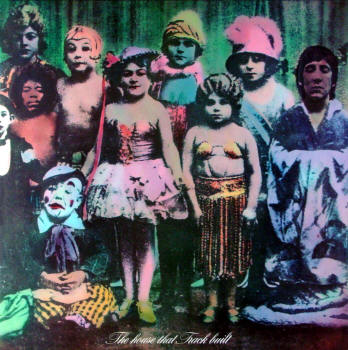
The second recording is almost as rare as the first. It is a studio recording of Young Man Blues which the boys laid down in October of 1968 as they entered the studio to begin recording their album, Tommy. Pete hadn't quite filled out the song list or even fully fleshed out the story line of Tommy at this point. As such, Pete considered trying to shoe-horn the beloved Young Man Blues into the story line of a frustrated and misunderstood boy bullied into a catatonic state. The arrangement is neither fully like the preceding recording, nor like the following. And, to be blunt, it's not very impressive. Ultimately the usage of the song would be shelved and it would appear only on the beyond-rare 1969 compilation album, The House That Track Built.
The Who perform Young Man Blues -- Live at Leeds
The Who were among the greatest live bands ever. Okay, I'll say it, in their heyday there was no band as good as The Who when they took to the stage. And that heyday was, luckily, caught on tape six years and five days after our first featured recording on this post. It was Valentines Day of 1970 and the four working class lads from Sheperds Bush UK took to the stage in the college town of Leeds. The second song from that set was Mose Allison's Young Man Blues. And how the boys had grown up. The song is no longer a laid back jazz number, but instead a testosterone fueled explosion. But the amazing thing is, Pete's original arrangement as captured that night at The Scene Club, remains largely intact. The song was slated for release as a single in the US on Decca in September of 1970. They pressed a small but unknown number of records and included a picture sleeve, but never formally released the single. A very few found their way into circulation, making it one damn hard to find 45rpm record.
Mose Allison performs A Young Man
Ahhhh, Mose the muse. Here is the original recording from the 23 year-old Mose Allison's first album, Black Country Suite, released on the Prestige label in 1957. Cool and laid back and only 1:26 long, it is the unlikely song that inspired a big-nosed kid from the West End of London to challenge the system and grow more confident in his own voice.

Until tomorrow, we'll see you On The Flip-Side!

Monday, April 29, 2013

Song of the Week: The Who and Otis Blackwell -- Daddy Rolling Stone

The Who perform Daddy Rolling Stone
Otis Blackwell performs Daddy Rolling Stone

A little something different for this week's posts. We're going to take a look at five songs by The Who and trace them back to the original composer...or at least, to the inspiration behind the song. Not easy as The Who dropped studio recording of covers pretty early on and, unlike The Yardbirds, the early days of The Rolling Stones, or Led Zeppelin, Pete Townshend wrote largely fresh material.

We start today with Daddy Rolling Stone. That song was never released by The Who in the US, but it did see release in Europe as the Flip-Side of their third single, Anyway, Anyhow, Anywhere (the second under the name of The Who).

The Who's upbeat number was released on May 21 of 1965 on Brunswick in their native UK. Keith Moon's tin-can drum kit gets beaten to a pulp and Pete turns in some very fine single string lead work to make this a pill-infused mod raver. Roger is still in his "growl" phase and is supported nicely by John and Pete doing their best Marvelettes impersonation. From live recordings I've heard, I can say definitively, that this studio recording successfully captures The Who's live sound at this stage of their career.

Daddy Rolling Stone was written by Otis Blackwell and was his first release in 1953 for the Jay-Dee label. Blackwell's original is a slow brooding number with strong jazz undertones. Otis Blackwell was a prolific writer of many of the songs we consider standards. All Shook Up, Return To Sender and Don't Be Cruel for Elvis Presley, Great Balls of Fire and Breathless for Jerry Lee Lewis, Fever for Little Willie John are just a few of the notables.

Enjoy and we'll see you on the Flip-Side. 

Tuesday, October 9, 2012

Video Diary: The Who - My Generation

And another happy birthday. This time to the legendary bassist for The Who, John Entwistle. John would have been 68 today.

Tuesday, September 18, 2012

Song of the Week: The Who - Little Billy


Sometime after the nice little band from Shepherd's Bush released the brilliant, The Who Sell Out, a mockery of advertising and the music industry, someone from the American Cancer Society thought it might be a good idea to have a rock-n-roll band speak up against cigarette use. Maybe even record a quick little jingle like the four limeys had done to link their songs together on the aforementioned Sell Out album. Pete Townshend accepted and wrote a full length song. But Pete's sardonic whit was too much for the American Cancer Society. As a result, The Who's recording of their original, anti-smoking morality tale, Little Billy, didn't see the light of day until it was released on the eponymous time-filler of an album, Odds and Sods. The song, like the unreleased Glow Girl, written and recorded about the same time, is a beautiful transition between Sell Out and the lyrical and musical themes which would dominate their impending breakout, Tommy


Little Billy plays on many of the same themes of childhood shame, embarrassment, harassment, bullying  and revenge which colored much of Townshend's work of the 1960s. Preceding songs like I'm A Boy, Happy Jack, Pictures of Lily and A Quick One While He's Away all dealt with the tender issues which would become the center piece of Tommy. Here Billy is a fat, unpopular child who is mocked by the kids who "smoked cigarettes just to prove they were cool." Pete and Roger share vocal duties masterfully.

Now Billy and his classmates are middle-aged/with children of their own
Their smoking games are reality now/and cancer's seed is sown
Ha, ha, ha, ha
Ha, ha, ha, ha
Little Billy didn't mind
Most of them smoke maybe 40 a day/a habit Billy doesn't share
One by one they're passing away/leaving orphan's to Billy's care.
Get the feeling Pete was bullied as a kid?


Wednesday, January 11, 2012

Song of the Week: Pete Townshend - Is It In My Head?


Quadrophenia is one of the most highly praised albums of all time. It marks the end of an amazing run of four "must have albums" from The Who (preceded by Sell Out, Tommy, and Who's Next.) In 1972, as Pete began writing for Quadrophenia, Pete set out to rectify the wrongs he felt were beset upon him in his pursuit of the failed Lifehouse album, an aborted album that would become the critically acclaimed and high selling Who's Next. It seems everyone but Pete loved Who's Next. He couldn't let the failure of Lifehouse to fade and he was now set on creating another concept album. And he was also set on taking even more control of the band's direction, jettisoning extremely talented people like engineer Glynn Johns whom, Pete felt, hadn't shown enough support to Lifehouse and in fact forced him to put out the best songs from that session as Who's Next.


Pete retreated to his very advanced home studio on the island of Eel Pie and shut the world out. There he tried to expand on his groundbreaking use of electronics and crafted a thematic story of a downtrodden mod named Jimmy who, like Pete, seemed to be plagued by doubt and disappointment. When Pete emerged he had a comprehensive story and two hours of demos that sounded better than many other bands' completed songs. The Who had just completed their own recording studio and Pete brought the band in to put their stamp on his sophisticated demo recordings.

Until last month, when a Deluxe, remastered and expanded addition of Quadrophenia was released, most of those demos were only rumors. We got a few on the Scoop series, but not all of them. Well, here they are. To say they are well polished is an understatement. They are rock solid. Pete's drumming and bass work have improved from his demos in preparation for the Who's Next session and his voice is more confident too. His piano work is stellar and his guitar work is often more up front than in the final mixes for The Who.


Today we highlight the song Is It In My Head? On the final Quadrophenia version, Roger Daltrey sings with anger and aggression. And it is John Entwistle whose voice is mixed to the front on the chorus. But on this demo we get to hear Pete Townshend with his more vulnerable voice. It changes the posturing of the main protagonist from one who is confrontational and defiant to one who is unsure of even his own thoughts. Listening to all the demos, one is struck by how well thought out the songs were. One is also left with the sense of how much the band was a front for Pete Townshend's mind.


In the end, the recording and mixing of Quadrophenia was not what it should have been. The studio was not in shape for the recording (it actually flooded while they recorded and the control booth had to be stationed in a bus parked outside), the technology was not there for what Pete Townshend wanted to accomplish and the band was feeling like they were taking Pete's marching orders. In addition, producing and engineering the album was probably one job too many for Pete. At night Pete would take the tapes back to his home studio and bounce tracks (making a true remaster impossible) so as to allow him to over-dub more instruments. Likewise, John Entwistle would take tapes home to record his horn sessions at his studio. It's testament to the quality of the songs and the quality of the band that the album came out as good as it did.

And it's a testament to Pete's demos.

Tuesday, April 12, 2011

Song of the Week: "Forever's No Time At All", Pete Townshend and Billy Nicholls


Here today is a song from Pete Townshend that is not very much from Pete Townshend. The song is Forever's No Time At All and it appeared on Townshend's debut solo album, Who Came First. The album was released on Track Records in 1972 and consisted largely of material that The Who songwriter had leftover from his work on the 1971 mega record, Who's Next. But this song isn't one of those. In fact, it wasn't written by Townshend. Nor does Pete sing on it. The songwriter and singer is Billy Nicholls, a friend of Pete's who served as the staff songwriter for Immediate Records.


Pete Townshend recorded and produced Nicholls at Townshend's home studio -- where Pete recorded the entirety of Who Came First. True, Pete plays most of the instruments on the song. But, in the end, this is a Billy Nicholls song. We hope you enjoy it.

Thursday, February 3, 2011

Song Of The Week: "Tattoo", The Who


Me and my brother were talking to each other
'Bout what makes a man a man
Was it brain or brawn, or the month you were born,
We just couldn't understand

Our old man didn't like our appearance
He said that only women wear long hair

So me and my brother borrowed money from Mother
We knew what we had to do
We went downstairs, past the barber and gymnasium
And got our arms tattooed

Welcome to my life, tattoo
I'm a man now, thanks to you
I expect I'll regret you
But the skin graft man won't get you
You'll be there when I die
Tattoo

My dad beat me 'cause mine said "Mother"
But my mother naturally liked it and beat my brother
'Cause his tattoo was of a lady in the nude
And my mother thought that was extremely rude

Welcome to my life, tattoo
We've a long time together, me and you
I expect I'll regret you
But the skin graft man won't get you
You'll be there when I die
Tattoo

Now I'm older, I'm tattooed all over
My wife is tattooed too
A rooty-toot-toot, A rooty-tooty-toot-toot
Rooty-toot-toot tattoo too
To you

Monday, October 25, 2010

Song of The Week: The Dynamics -- Misery


Please see the comments below to learn more information about this song from the guitarist who performed on this number, Chris Bramlett.

What a nice little gem we have for you today. Even if you are a big-time music collector, I bet most of you are not familiar with this song. But, it might, just might, sound familiar. That's because this song, Misery, was the subject of some pretty blatant plagiarism by Pete Meadon. He being the one-time manager of The Who.

Back in 1964, Pete Meadon briefly changed the name of The Who to the High Numbers in an effort to get them bigger with the mod movement in London (being a High Number meant that you were of some importance in the gang). In June, Meadon and Chris Parmeinter took the band into the studio to cut some self-funded tracks that would have a very limited 1000-run pressing on Fontana Records. The lads recorded 4 tracks that day: Eddie Holland's Leavin' Here, Bo Diddley's Here 'Tis, and Zoot Suit and I'm The Face. The latter two songs were credited to Meadon who, in another effort to get in with the mod movement, wrote lyrics which spoke to the mod experience. I'm the Face is a not so subtle rip-off of the oft-covered Slim Harpo number, Got Love If You Want It. Zoot Suit, a not so subtle rip-off of today's song of the week. It is unlikely that Pete Townshend even plays on Zoot Suit, but rather that a studio musician brought in by Meadon and/or Fontana plays the jazzy guitar riffs. To be blunt, the sound, style and quality of performance are not Townshend at all. In Dave Marsh's book, Before I Get Old: The Story of The Who, Marsh refers to Townshend's style and makes no mention of a studio musician. However, on the liner notes of Odds and Sods, Townshend says of the studio musicians on these High Numbers tracks: "Superb jazz guitar solo from somebody I don't recognize, fast piano from some pilled-up lunatic who probably made more in session fees that day than we did from the ensuing year's work." In Pete's new auto biography, he says he played on the session but that the work shows his style was not fully formed yet. You decide. 

But that is not our SoTW, Misery is. In 1963 a Detroit band called The Dynamics sauntered into the studio to record this nice cross-genre song. This is just one of those great songs that surprises me. The catchy guitar riff never seems to fit the rest of the song -- in a VERY good way. The singer's temporary falsetto always catches me off guard and the sax solo is a surprise considering how dominant the guitar is in the rest of the song. And then there's the exit vocals. "No-no!" How frickin' cool.

Enjoy your misery.

Monday, November 23, 2009

Song of the Week: "Deuces Wild", Link Wray

{Right click here to listen to Link Wray perform our SoTW, Deuces Wild, while you read this lovely article.}

Have you ever seen the diminutive little primate from Madagascar they call the Aye-Aye? It's one strangle looking creature. It doesn't look like a primate, but it's not quite a rodent and it's not quite a feline either. It's so strange as to make you stop and take a look. Invariably you make an audible query to no one in particular: "What is that? It looks like some sorta missing link or sumpin'." (in this theoretical conversation, you speak with a poor colloquial American accent, sorry.)

What the hell does an Aye-Aye have to do with our SotW you ask? Good question. An Aye-Aye, I propose, is like our artist this week. That artist is primitive guitarist Link Wray who, in his day, sounded nothing like anyone else. How refreshing is that? Link Wray and his Raymen -- brothers Doug and Vernon and bassist Shorty Horton) first appeared in record bins in 1958 with their instrumental hit, Rumble. The song was tagged as subversive and banned. (Take a second to let that sink in. An instrumental was banned! I know of no other instrumental that has ever been banned.) Suddenly Link Wray and his Raymen were in demand in the clubs of their adopted home of Washington, DC.

Let's back up a bit. Link Wray (born Fred Lincoln "link" Wray Jr.) was perhaps the most unlikely person to become a pop star. Link was the son of two preachers, one caucasian, the other a Shawnee, who grew up in rural Dunn, North Carolina. After a stint in the Army, Link landed in Norfolk, Virginia where he hooked up with his brother Vernon who was trying to make it as a singer. The band relocated to Washington, DC around 1957 where they got a gig as the house band on Milt Grant's House Party, a local teen dance show. By now they were playing as Lucky Wray and the Palomino Ranch Hands. It was here that they improvised the rough strewn song that would become known as Rumble to cover the intro and outro of a commercial break. The record took off locally and the band was now known as Link Wray and the Raymen (also, the Wraymen).

For the next few years Link Wray and the Raymen would record numerous singles, and the occasional album filled with gritty and beautifully sloppy, under-produced instrumentals (with the occasional vocal number thrown in) in their own recording studio which was actually a converted chicken coop. Link preferred the cheaper guitars and had a special affinity for the easy to overdrive Danelectro Longhorn played through a small Premiere 71 amp. As he was also largely deaf, he liked to play loud. Today's SoTW, is illustrative of such a recording. It's Deuces Wild, the 16th single from Link Wray and the Raymen, and it's a wild romp of a song recorded in the sweltering summer heat of Washington, DC in 1964. That's right, this torture device of a song was recorded in 1964. The Beatles had just played their first ever gig in America just down the street from where Link Wray recorded in his chicken coop. The Kinks and The Who were for the first time ever entering the British studio with American producer, Shel Talmy. Things were about to change in America. But in the chicken coop, the Raymen were running through yet another of Link's demented instrumental compositions. These didn't rely on a deft right hand like Dick Dale's numbers, they didn't require exquisite production as did those of The Shadows, and they didn't rely on undeniable melody lines as did the songs of the Ventures. Link Wray and the Raymen did it with brute force. They performed with the primal force of an Aye-Aye (okay, Aye-Aye's aren't known for primal force, but I need to circle back and wrap this puppy up...so work with me). Link Wray's work became hugely influential to the next generation of songwriters such as Ray Davies of The Kinks and Pete Townshend of The Who. Pete Townshend noted in 1970, "He is the king. It if hadn't been for Link Wray and Rumble, I would have never picked up a guitar."

Now sit back and enjoy the human Aye-Aye, Link Wray, perform his 1964 composition, Deuces Wild. This is some wild and wooly stuff.

Wednesday, October 7, 2009

Song of the Week: "Silly Girl", Television Personalities

Sometime around 1980, an off-key whimper of an album hit the record bins in the UK. A simple white album cover with a picture of the boob-tube characters, The Avengers was accompanied by the black and white words: Television Personalities. The backside of the album had photos of cops, hands, cats, Syd Barrett, "Alex" from A Clockwork Orange, Pete Townshend, The Creation and a pudgy kid holding a monkey. It looked much like the wall of most teenagers of the day (with the exception of the tilt towards 60's mod pop/psychedelia). The album is entitled And Don't The Kids Just Love It. It's the first output from the do-it-yourself band, Television Personalities, a band centered around the work of singer and songwriter Dan Treacy.

Television Personalities were amateurish (at best). But that was the intrigue of the band. Treacy played warbly, poorly tuned guitar and, at times, sang so far out of key in his thick British accent that you had to wonder if he was doing it on purpose. Despite, or because of, his musical limitations, Treacy made an impact in Britain. Here was a kid and his friends who wanted to make music. So they did it. They wrote songs, recorded those songs themselves, designed the album cover themselves and released it on their own label. No more A&R suits swilling gin and tonics telling you how unmarketable you are. Go straight to the record stores yourself and sell the record yourself.

Today's SoTW, is one of those songs off of that first album. It's one of their more accessible songs and it is entitled, Silly Girl. It features Treacy strumming frantically on guitar as the bass plays an overly complicated run. Ghostly noises fill out the aura of the song.

Television Personalities never broke the charts, but they did influence deconstructionists bands like Scotland's the Jesus and Mary Chain and Stockton, California's Pavement.

Friday, September 4, 2009

Song of the Week: "Shakin' All Over", Johnny Kidd & the Pirates


The final installment of "under the covers" has us Shakin' All Over. Most people under the age of 60 know this song as one of the more powerful numbers from The Who's legendary Live at Leeds album recorded in 1970. Pete Townshend and his cohorts did a pretty serious rework of the number and it is their version that prevails as the norm today. Under The Who's spell the song becomes a slower, brooding and dangerous song driven by Pete Townshend's Gibson SG with P-90 pickups and a host of funky and obscure chords thrown in.

However, that's not how the song started. The song was hugely popular before The Who turned it into a staple of their live set. In fact, the song was number one in the UK singles charts in 1960 when Johnny Kidd and The Pirates first wrote and recorded it. Johnny Kidd and The Pirates get major props from Flip-Side for wearing piratey outfits on stage and Kidd even sported a pirate eye patch. Argh. No sightings of a parrot, sadly. The Pirates were one of England's first pop rock bands and a major influence on bands like The Beatles and, obviously, The Who. The Guitar work by Joe Morretti, who played guitar on yesterday's selection of Brand New Cadillac, is inventive, clean and catchy as hell. It's what makes this song work. In the rock movement of the early and mid 60's this song became a staple of every band who had a halfway decent guitarist.

Now I must say, neither the original or The Who's version is my favorite. Nope, that honor belongs to a version done in 1965 by West Berlin, Germany band, The Lords. Check that killer version out here from YouTube. "Shakin' down da zee vone!"