Showing posts with label howlin' wolf. Show all posts

Tuesday, October 15, 2013

Top 10 most popular On The Flip-Side posts of all time.

It was five years ago today that we posted our first On The Flip-Side post. Look at yesterday's post to hear that first song posting. Today we are looking at the Top 10 most clicked on posts in the five year history of On The Flip Side. It's quite an eclectic mix. Explore. Enjoy.
10.  Nirvana and Leadbelly -- Where Did You Sleep Last Night? [original post here] = 1504 hits.

9.  Pete Townshend - Is It In My Head (demo) [original post here] = 1603 hits.
8.  Howlin' Wolf featuring Hubert Sumlin (RIP) - Smokestack Lightnin' [original post here] = 1675 hits.
7.  Junior Kimbrough - Meet Me In The City [original post here] = 1725 hits.
6.  Bill Haley and the Comets -- Razzle Dazzle [original post here] =  2048 hits.
.
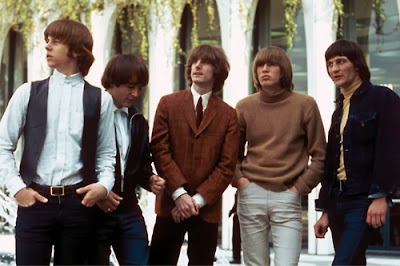
5.  The Byrds - Have You Seen Her Face? [original post here] = 2081 hits
4.  Happy 90th Birthday to Bettie Page [original post here] = 2081 hits.

3. The Velvet Underground -- Sweet Jane (alternate version) [original post here] = 2570 hits.
2.  Blind Willie McTell - God Don't Like It [original post here] = 3931 hits.
And the number 1 post of all time, in a runaway is...

1.  The Runaways -- Cherry Bomb [original post here] = 12,940 hits!
Until next time, we'll see you On The Flip-Side!


Tuesday, April 30, 2013

Song of the Week: The Who and Mose Allison -- Young Man Blues

Day 2 of our look at the origins of The Who finds On The Flip-Side looking at Young Man Blues. The song was written and recorded as A Young Man by jazz pianists and Tupelo, Mississippi native, Mose Allison. But more on him and that recording later. It is this song, we should note, that was the inspiration for Pete Townshend's magnum opus, My Generation. It's not hard to make the connection -- a young man filled with frustration and searching for a voice of one's own, even if that voice stutters in the face of powerful oppression.
The Detours perform Young Man Blues at The Scene Club
The first recording we feature today is from a bootleg called Keep From Crying which I picked up when in high school (I bought it from my HS Psychology teacher!). The recording appears to have been made on February 9, 1964 at the Scene Club in London. The band was likely going under the name of The Detours that night. Sometime that month they would change their name to The Who (and then briefly to The High Numbers). The band is raw and young and the song, while changed from Allison's piano number, remains largely a jazzy piece. Note that the elder statesmen, Doug Sandom, is still on drums. Keith Moon wouldn't show up for a few months yet.
The Who perform Young Man Blues -- Studio
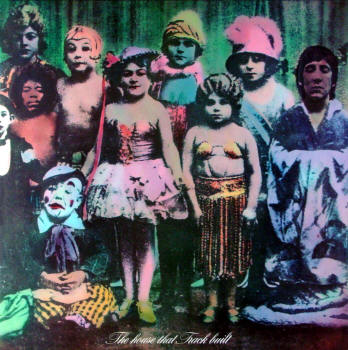
The second recording is almost as rare as the first. It is a studio recording of Young Man Blues which the boys laid down in October of 1968 as they entered the studio to begin recording their album, Tommy. Pete hadn't quite filled out the song list or even fully fleshed out the story line of Tommy at this point. As such, Pete considered trying to shoe-horn the beloved Young Man Blues into the story line of a frustrated and misunderstood boy bullied into a catatonic state. The arrangement is neither fully like the preceding recording, nor like the following. And, to be blunt, it's not very impressive. Ultimately the usage of the song would be shelved and it would appear only on the beyond-rare 1969 compilation album, The House That Track Built.
The Who perform Young Man Blues -- Live at Leeds
The Who were among the greatest live bands ever. Okay, I'll say it, in their heyday there was no band as good as The Who when they took to the stage. And that heyday was, luckily, caught on tape six years and five days after our first featured recording on this post. It was Valentines Day of 1970 and the four working class lads from Sheperds Bush UK took to the stage in the college town of Leeds. The second song from that set was Mose Allison's Young Man Blues. And how the boys had grown up. The song is no longer a laid back jazz number, but instead a testosterone fueled explosion. But the amazing thing is, Pete's original arrangement as captured that night at The Scene Club, remains largely intact. The song was slated for release as a single in the US on Decca in September of 1970. They pressed a small but unknown number of records and included a picture sleeve, but never formally released the single. A very few found their way into circulation, making it one damn hard to find 45rpm record.
Mose Allison performs A Young Man
Ahhhh, Mose the muse. Here is the original recording from the 23 year-old Mose Allison's first album, Black Country Suite, released on the Prestige label in 1957. Cool and laid back and only 1:26 long, it is the unlikely song that inspired a big-nosed kid from the West End of London to challenge the system and grow more confident in his own voice.

Until tomorrow, we'll see you On The Flip-Side!

Monday, December 5, 2011

Song of the Week: Howlin' Wolf (featuring Hubert Sumlin) - Smokestack Lightning

Hubert Sumlin died yesterday. He was 80. I would like to think that most everyone knows and appreciates what he did for blues music, but that just isn't the case. Hubert Sumlin was the quiet, diminutive and happy-go-lucky sideman to blues giant, Howlin' Wolf.

Howlin' Wolf first started working with Hubert Sumlin when Sumlin was still a teen, and not terribly confident on guitar. Sumlin played second guitar to Willie Johnson. Where Willie Johnson was aggressive in his playing and his life and would musically go toe to toe with the massive Howlin' Wolf, Sumlin sat back and remained quiet.
When Willie Johnson parted ways with Howlin' Wolf, Hubert Sumlin was moved to first chair. His style had not taken shape and Howlin' Wolf pushed him hard, perhaps too hard. In a wonderful Howlin' Wolf documentary film, Sumlin recounts how Wolf would badger and bully him to be better. As they worked on an important recording, Howlin' Wolf grew impatient at what he felt was Sumlin's lack of originality. As he often did, Wolf sent Sumlin packing. As Sumlin packed up his gear and began to leave the studio, Howlin' Wolf yelled after him something along the lines of "put your guitar pick away. Learn how to play with your fingers and come back with something that will stand out. If you don't trust yourself to play something great then how I can trust you to play something great? You can come back tomorrow and have one more try at it. If I don't like what you have, then I will let (studio musician and Wolf's second guitarist on the session) Buddy Guy take it over." With that, Sumlin recounted, the wallflower that was Hubert Sumlin went home, cried and began on the task Howlin' Wolf had given him: A finger picking guitar riff that would compliment the song. The next morning, fingers raw from a sleepless night of playing his new riff, Hubert Sumlin came back to Chess Studios where Wolf and his band, including Buddy Guy were ready to record. Wolf tersely told Sumlin he better impress and that he only had one chance to do so. Hubert Sumlin sat down and began to play his finger-picking riff in the key of E. After a few seconds Howlin' Wolf interrupted Sumlin's audition and turned to producer Leonard Chess and said, "you ready to record?". With that the band took off on Howlin' Wolf's biographical song, Smokestack Lightning. The guitar riff was unique and catchy and fit perfectly with the song and Wolf's pain stricken tale. The guitar riff would soon be pilfered by Dale Hawkin's own teenage guitarist, James Burton, to create the iconic Suzie Q. Bands like The Yardbirds, Manfred Mann, Creedence Clearwater Revival and a host of others would also mine the guitar riff with great success.
The relationship between Hubert Sumlin and Howlin' Wolf was very similar to father and son. As detailed in James Segrest's book, Moanin at Midnight: The Life and Times of Howlin' Wolf, the two did not always get along, but they always respected each other, looked out for each other and, in the end, were always inseparable. An illustrative tale from the book stands out. While touring thru the South shortly after Wolf had "made it", Howlin' Wolf drove the tour bus late one night to a spot not on the route. Wolf was quiet and tense and the whole band had fallen asleep in the back. Sumlin, sensing something was up, sat with his mentor in the front row and said nothing. Wolf stopped the bus in front of a run-down house and walked tentatively to the front door before eventually knocking on the door. An elderly woman came to the door and and the powerful Howlin' Wolf began to shake and said "Mama, it's me, Chester. How ya doing?". His mother had rejected him years before for a violent incident that happened when a teenage Chester Burnett, now The Wolf, had laid out a man he found on his mother's property. She told him to leave and he had not seen her in the 30 or so years since. That incident, by the way, is the major theme of the song, Smokestack Lightnin' as it is in another of his songs, Back Door Man.  Howlin' Wolf handed the elderly lady a $100 bill, a fortune in the mid-50's. The mother ripped up the money and threw the pieces on the ground proclaiming she wouldn't take money earned by singing the devil's music. With that she turned and went back into the house. The mighty Wolf fell to his knees and wept. Hubert stepped out of the car and walked his friend to the passenger seat and then took over the driving duties. Sumlin only said, "I'm sorry Wolf" and the two never spoke of the incident again. And the rest of the band never woke and never knew of the moment of vulnerability.
Another interesting tale, this time from Robert Gordon's book, Can't Be Satisfied: The Life and Times of Muddy Waters, is when, in one of the common instances of Sumlin and Wolf parting ways, Sumlin quickly got snatched up by arch-rival Muddy Waters. Wolf had more than able musicians filling in, but they weren't Hubert. One night Howlin' Wolf burst into a club on Maxwell street and pushed his way to front and center of the stage and began heckling Muddy Waters for stealing his guitarist. Muddy could give as good as Wolf and began taunting Wolf. After a few rounds, Howlin' Wolf pointed to Sumlin and said something along the lines of "get off that damn stage with these fools, you're my guitarist." At this point the band stopped playing and one of Waters' musicians pulled out a gun (the two books talk incessantly about how many guns and knives were stored in blues musicians' guitar cases). Wolf moved onto the stage and headed right at the man pointing a gun at him and said something akin to "you better put that away before I pull it out of your hands." With that Muddy Waters signaled to the sideman to stand down and Howlin' Wolf unplugged Hubert's amp and walked off.  Hubert packed up his guitar and followed Howlin' Wolf out of the club.
Hubert Sumlin remained Howlin' Wolf's sideman until Wolf died in 1976. Hubert's unique, bouncing and warbling guitar riffs often spoke in retort to Wolf's guttural howls. Any musician knows how important Hubert was to Wolf. Wolf knew it and he would stand up to defend it.

I got a chance to see Hubert Sumlin perform when he was but a spry 75 years old. His skills had diminished, that's for sure. Guitarist GE Smith performed with him and brilliantly would fill a missing part as soon as Sumlin would stumble. But still, at 75, he was a better guitarist with far more style than the vast majority of the strat-n-a-hat SRV clones that fill every blues jam around the globe. I got to shake his hand and see him smile and hear him play. How damn cool is that?

Enjoy this great live performance of Howlin' Wolf with Willie Dixon, Sunnyland Slim, Clifton James and, of course, Hubert Sumlin off on the right of our screen. Dig that crazy guitar work.

Thank you Hubert Sumlin!

Tuesday, October 25, 2011

Song of the Week: Big Bill Broonzy - Looking For My Baby


Listen - Big Bill Broonzy performs Looking For My Baby

Big Bill Broonzy was born in the late 1800s in Mississippi. He started recording in 1928 and didn't stop until his death (which usually stops most recordings by an artist) thirty years later. Big Bill Broonzy recorded such staples as I'm Gonna Move To The Outskirts of Town, CC Rider and, of course, his most famous song, Key To The Highway, but somehow he is not considered a luminary like Muddy Waters, Howlin' Wolf or Robert Johnson. It's not for lack of musicianship as his guitar skills were magnificent.

We listen today to his 1941 recording of his original song,  Looking For My Baby. Cool guitar refrains and menacing lyrics mark this warbly recording for Okeh Records. Enjoy. 

Monday, October 27, 2008

Song of the Week: "Mr. Highway Man", Howlin' Wolf


Me? No, no I've never been in a knife fight in a rural juke joint in the South. I did once cut myself shaving though. Don't laugh, it was pretty bad. I bled for hours and had to walk around with a little piece of bloody tissue stuck to my chin. Truth be told, I wouldn't know what to do if I was in a knife fight. However, one thing I do know about rural juke joint knife fights is that if they had a soundtrack (which I don't think they do), the soundtrack would have to be performed by the human knife, Howlin' Wolf.

I trust every reader here knows the work of the Wolf very well. The musical shadow he casts is as large as the man himself (that's about 6' 6" and 350 pounds). Nobody ever sounded like the Wolf before him, and nobody has sounded like him since. Nobody ever will. Most casual listeners are already aware of his excellent records he cut up North in Chicago for Chess Records in the middle to latter half of the 1950's and early 1960's. But there is another goldmine of Wolf records he cut in Memphis' Sun Studios (yep, the same Sun Studios in which a lip quivering cat named Elvis would soon record) with Sam Phillips.

In 1951 the Wolf took his head-cutting band into the small studio to record upwards of 30 songs over the course of the year. The band was every bit as powerful as the Wolf's voice. A voice that is perhaps best described as two-parts sandpaper, one part squeaky-toy stuck in the throat of an alligator, one part Pentecostal preacher, one part devils serpent, one part repentant sinner. Taken together it was 100% Howlin' Wolf.

Not many bands would be able to match the power of the Wolf. But this Arkansas-based band he put together was equal to any task. Powered by over-driven low wattage amps, a drum kit that is less played than beaten into submission, a piano that sounds like it is in danger of splintering into 1,001 pieces, and, of course, Wolf's own cross-harp playing that emulated the chug of a northbound train called Smokestack Lightning. The same train which carried away a teenage fugitive from a righteous crime. This band, like Wolf, was power incarnate.

Wolf's later, more famous work was backed up by one of the all-time great guitarists, the deft finger picker, Hubert Sumlin. But this earlier band had a guitarist with a very different approach. He was an aggressive flat picker named Willie Johnson. Where Sumlin would lay back and beautifully fill in the holes graciously left by Wolf, Johnson would challenge the Wolf at every syllable. Johnson's rugged voice came not from his mouth, but from his fingers. Through those fingers he pushed a small tube amp beyond control as he would mix in jazzy 9th chords with rusty 7th chords to create a full attack that was every bit as powerful as the Wolf. Johnson's guitar work is confident, relentless, brash and without hesitation. He never lays back as he and Wolf stab and swing at each other wildly with their musical knives.

Rock-n-Roll didn't exist yet. But that's only because the marketing department was a couple years late to the game. The work Howlin' Wolf (and occasional band member Ike Turner) did at Sun was as powerful as anything ever recorded at the studio. Sun's owner and sometime producer, Sam Phillips described the sessions with Wolf in the book, Moanin' at Midnight, the Life and Times of Howlin' Wolf : "I tell you, the greatest thing you could see to his day would be Chester Burnett (aka, The Howlin' Wolf) doing one of those sessions in my studio....his eyes would light up and you'd see the veins come out on the back of his neck. Awooooo!" Bold words from a man who recorded Elvis, Carl Perkins, Johnny Cash, Ike Turner, Roy Orbison and Jerry Lee Lewis.

Mr. Highway Man is just one of the many great songs Howlin' Wolf and his band recorded that year in Memphis. Moanin' At Midnight, Evil, Howlin' Wolf Boogie, How Many More Years. Too many great songs to tell you about on two great albums. Enjoy...and don't get hurt!